
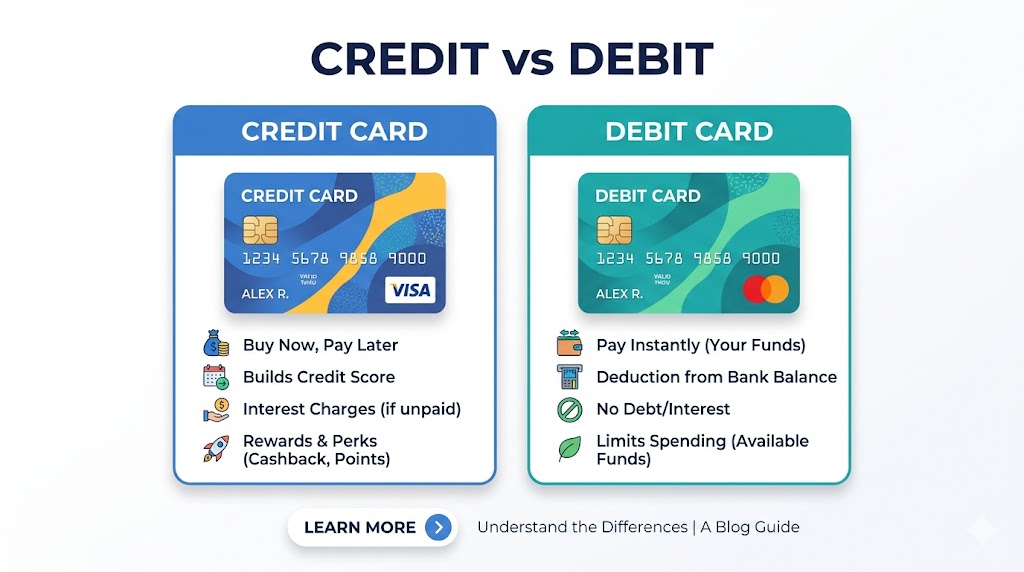
Understanding the difference between credit card vs debit card india is one of the most important financial decisions you will make as a modern Indian consumer. In 2026, where digital payments dominate and UPI, RuPay credit cards, and fintech apps are deeply integrated into daily life, choosing the right payment method can significantly impact your financial health.
Both cards may look similar, but they operate on completely different principles. One gives you access to borrowed money, while the other uses your own funds. This guide will break down every aspect of credit card vs debit card india, helping you decide which one suits your needs—and when to use each.
What is a Credit Card?
A credit card is a financial tool that allows you to borrow money from a bank or financial institution up to a certain limit.
Key Features of Credit Cards:
- Pre-approved credit limit
- Interest-free period (typically 45–50 days)
- Rewards, cashback, and loyalty points
- EMI conversion for large purchases
- Builds credit history
Every time you swipe your credit card, the bank pays on your behalf, and you repay later.
👉 Learn more: credit card interest rates india
What is a Debit Card?
A debit card is directly linked to your bank account and allows you to spend only the money you already have.
Key Features of Debit Cards:
- Instant deduction from bank account
- No borrowing or credit involved
- No interest charges
- Easy access via ATMs and POS machines
Debit cards are simple, safe, and ideal for controlled spending.
Credit Card vs Debit Card India: Detailed Comparison
Here’s a comprehensive comparison of credit card vs debit card india:
| Feature | Credit Card | Debit Card |
|---|---|---|
| Source of Funds | Borrowed money | Your own money |
| Interest | Yes (if unpaid) | No |
| Credit Score Impact | Builds score | No impact |
| Rewards | Cashback, points, travel perks | Limited |
| Approval | Requires eligibility | Instant with account |
| Spending Limit | Bank-defined | Account balance |
| Fraud Protection | Strong | Moderate |
| EMI Option | Available | Not available |
This table clearly shows how credit card vs debit card india differs across practical factors.
How Interest Works on Credit Cards
If you fail to pay your full outstanding amount, interest is applied:
Interest=P×R×T
Typical credit card interest rates in India range between 36% – 48% annually.
👉 Official regulatory authority: https://www.rbi.org.in/
This is a critical factor when evaluating credit card vs debit card india.
Advantages of Credit Cards
1. Builds Credit Score
Using a credit card responsibly helps you build a strong CIBIL score, which is essential for:
- Personal loans
- Home loans
- Car loans
2. Rewards and Cashback
Credit cards offer:
- Cashback on spending
- Reward points
- Travel benefits
3. Emergency Financial Support
Credit cards act as a financial buffer during emergencies when you don’t have immediate funds.
4. EMI Conversion
Large purchases can be converted into easy monthly installments.
Disadvantages of Credit Cards
- High interest if dues are not paid
- Risk of overspending
- Late payment penalties
- Hidden charges
👉 Learn more:
credit card charges india
Advantages of Debit Cards
1. No Debt Risk
You can only spend what you have—no borrowing involved.
2. Easy to Use
No approval process, no credit checks.
3. Better Budget Control
Helps you manage spending effectively.
4. No Interest Charges
Unlike credit cards, there is zero interest.
Disadvantages of Debit Cards
- No credit score building
- Limited rewards
- No emergency borrowing
- Less fraud protection compared to credit cards
When to Use Credit Card vs Debit Card India
Understanding when to use each is key.
Use Credit Cards For:
- Online shopping (better protection)
- Large purchases
- Travel bookings
- Building credit score
Use Debit Cards For:
- Daily expenses
- ATM withdrawals
- Budget-controlled spending
- Small transactions
This practical usage strategy simplifies credit card vs debit card india decisions.
Beginner Strategy: Best Approach
If you’re new to financial products:
Step-by-Step Plan:
- Start with a debit card
- Learn spending discipline
- Apply for a beginner credit card
- Use credit card for limited expenses
- Pay full dues every month
👉 Improve approval chances:
improve credit card approval india
This hybrid approach works best in the credit card vs debit card india scenario.
Security Comparison
Credit Card Security
- Chargeback facility
- Fraud protection
- Not directly linked to your bank account
Debit Card Security
- Direct access to bank funds
- Immediate deduction in case of fraud
- Requires careful monitoring
Both are regulated by RBI security norms.
Smart Usage Checklist
✅ Best Practices:
- Always pay full credit card bill
- Keep credit utilization below 30%
- Enable SMS/email alerts
- Avoid using cards on unsecured websites
- Regularly monitor transactions
These habits improve your experience with both card types.
Common Mistakes to Avoid
❌ Credit Card Mistakes:
- Paying only minimum due
- Missing payment deadlines
- Maxing out credit limit
❌ Debit Card Mistakes:
- Ignoring balance tracking
- Using unsafe ATMs
- Sharing OTP or PIN
Avoiding these mistakes is essential in managing credit card vs debit card india effectively.
Long-Term Financial Impact
Credit Cards Help You:
- Build credit history
- Access loans easily
- Get better interest rates
👉 Related:
increase loan eligibility india
Debit Cards Help You:
- Maintain financial discipline
- Avoid unnecessary debt
- Control spending
Both tools serve different financial goals.
Real-Life Examples
Example 1: Salary Day
You receive your salary → Use debit card for essentials.
Example 2: Emergency Expense
Unexpected expense → Use credit card for immediate funds.
Example 3: Online Shopping
Use credit card for rewards and fraud protection.
Example 4: Monthly Budgeting
Use debit card to avoid overspending.
These examples clarify the real-world application of credit card vs debit card india.
Advanced Tips for 2026
- Use RuPay credit cards for UPI payments
- Combine debit and credit strategically
- Track expenses using apps
- Upgrade to premium cards after building history
Credit Card vs Debit Card India: Final Verdict
So which one should you choose?
- Choose debit cards for control and safety
- Choose credit cards for growth and rewards
The smartest approach is to use both wisely.
Final Thoughts
Understanding credit card vs debit card india is essential in today’s financial landscape. Each card has its own strengths, and using them correctly can improve your financial stability and growth.
Start with discipline, build your credit profile, and use both cards strategically to maximize benefits.