
In 2026, navigating Insurance Claim Rejection Reasons India has become significantly more transparent thanks to landmark IRDAI Guidelines (Effective 2025-26). The most transformative change is the reduction of the Moratorium Period from 8 years to 5 years. This means that once you have continuously renewed your policy for five years, the insurer cannot reject a claim based on non-disclosure of health facts unless they prove deliberate fraud. Despite these protections, thousands of claims are still rejected due to preventable technical errors.
Understanding Insurance Claim Rejection Reasons India is essential for every policyholder. Whether it’s a health, life, or motor insurance claim, the “Devil is in the details.” In 2026, insurers are now mandated to provide a written justification for every rejection within 30 days. By following a functional and disciplined documentation strategy, you can ensure that your hard-earned coverage remains absolute when you need it most.
Who is this for?
This guide is for anyone in India who currently holds or is planning to buy an insurance policy. If you want to ensure your family is secure and your claims are settled instantly without legal battles in 2026, this breakdown is for you.
Top Insurance Claim Rejection Reasons India (2026)
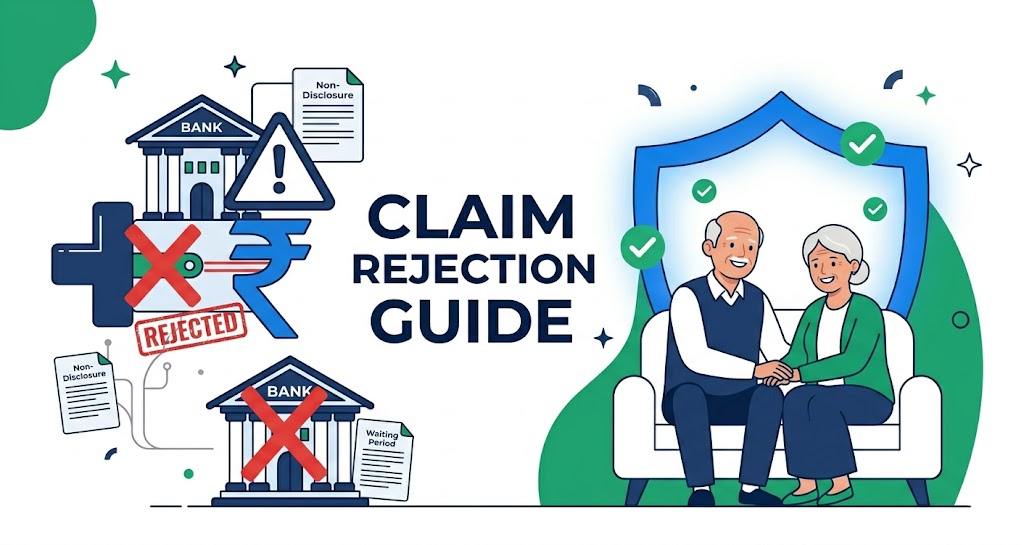
While the law has become friendlier, these core reasons still lead to most rejections:
| Rejection Reason | Coverage Type | Why it Happens in 2026 |
| Non-Disclosure | Health / Life | Hiding smoking habits or “silent” conditions like BP/Sugar. |
| Waiting Periods | Health | Claiming for surgeries (like Cataract) before the 3-year cap. |
| Policy Lapse | All | Premium not paid within the grace period (usually 30 days). |
| Technical Mismatch | Motor / Health | Name on the policy doesn’t match the Aadhaar or ID proof. |
| Permanent Exclusions | All | Claiming for items like cosmetic surgery or illegal acts. |
New 2026 IRDAI Protections You Must Know
To combat unfair Insurance Claim Rejection Reasons India, the regulator has introduced these valuable shields:
1. The 5-Year “Incontestability” Rule
As of 2026, your policy becomes “Incontestable” after 5 years of continuous coverage. This is a powerful win for consumers, as insurers can no longer dig up decade-old medical records to deny a current claim.
2. Waiting Period Caps
The maximum waiting period for any pre-existing disease (PED) is now capped at 3 years (down from 4). If you’ve held your policy for 36 months, your PED claims must be honored instantly.
3. Non-Discrimination Policy
Insurers can no longer summarily reject claims or policy applications for severe conditions like Cancer, HIV/AIDS, or Renal failure. They must offer a product with specific underwriting rather than a flat refusal.
Step-by-Step Process to Avoid Rejection
- Disclose Everything: Use the “Proposal Form” to mention even minor past surgeries or chronic habits.
- Verify Digital KYC: Ensure your Aadhaar Bank Linking India is active so the insurer can verify your identity instantly.
- Read the Exclusions: Ask for the “Customer Information Sheet” (CIS) in your regional language for absolute clarity.
- File Promptly: In 2026, you must intimate the insurer within 24-48 hours of the incident (Hospitalization or Accident).
- Audit Your Documents: Ensure the discharge summary, bills, and investigation reports are original and consistent.
Tips for a “Bulletproof” Claim
To make your claim process truly valuable, always keep a digital folder of your medical records. Additionally, performing a PAN Card Correction Online India ensures your financial profile is consistent, preventing “Income Mismatch” rejections in high-value life insurance. If you move houses, update your Voter ID Status Check India so your “Address of Incident” doesn’t conflict with your policy records, especially for motor or home insurance.
The “InstaClaim” Standard
In 2026, many private insurers offer a “3-Hour Promise” for cashless approvals. To qualify, you must have a “Clean Record” and a fully updated digital profile.
Common Mistakes to Avoid
- Delaying the Intimation: Even if you plan to file a “Reimbursement” claim later, you must inform the bank/insurer instantly upon admission.
- Inaccurate Diagnosis: Ensure the doctor’s notes match your verbal history. A small discrepancy can be flagged as “Misrepresentation.”
- KYC Neglect: Ensure your mobile number is linked to your Aadhaar Bank Linking India to receive mandatory claim status OTPs.
Safety & Security Guidelines
The IRDAI has fortified the Grievance Redressal Mechanism in 2026. If your claim is rejected unfairly, you can approach the Insurance Ombudsman or use the E-Jagriti portal for a legal remedy. Never pay “Processing Fees” to agents promising to “fix” a rejected claim; a trusted insurer will never ask for cash.
Internal Resources for Policyholders
- Verify your Voter ID Status Check India for address proof consistency.
- Use Aadhaar Bank Linking India for secure and fast claim payouts.
- Update your PAN Card Correction Online India to align your financial records.
Frequently Asked Questions
Can a claim be rejected after 5 years of policy renewal? In 2026, claims can only be rejected after 5 years if the insurer can prove established fraud. Simple “non-disclosure” of a condition is no longer a valid reason after the 5-year moratorium.
What is the “Waiting Period” for knee replacement in 2026? Under new rules, the maximum waiting period for specific surgeries like knee replacement or cataracts is now 3 years.
What should I do if my claim is rejected? First, check the mandatory “Written Reason” provided by the insurer. If it’s a documentation error, resubmit. If you disagree with the logic, file a complaint with the insurer’s Grievance Officer.
Does “No-Claim Bonus” (NCB) affect my claim? No. Claiming will reset your NCB for the next year, but having a high NCB does not change the “validity” of your current claim.
Conclusion
Understanding Insurance Claim Rejection Reasons India is essential to protect your family’s financial future in 2026. Awareness of common Insurance Claim Rejection Reasons India—such as non-disclosure, policy exclusions, and documentation gaps—can help you avoid costly mistakes. By leveraging the updated 5-year moratorium rule and keeping your records accurate and up to date, you can reduce the risk of Insurance Claim Rejection Reasons India affecting your claim outcome.
To minimize Insurance Claim Rejection Reasons India, choose a trusted insurer, disclose all medical history during the proposal stage, and carefully review policy terms and exclusions. Staying proactive about Insurance Claim Rejection Reasons India ensures that during a medical emergency, your claim process remains smooth and stress-free.
By understanding and actively preventing Insurance Claim Rejection Reasons India, you can navigate the 2026 insurance landscape with confidence and secure reliable financial protection for your family.