
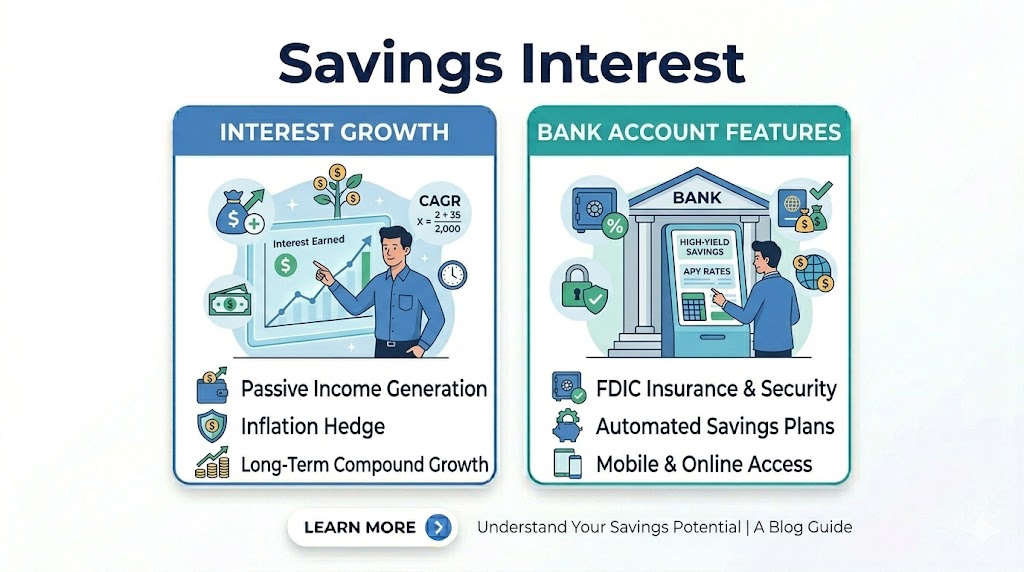
Navigating Savings Account Interest Rates India is a critical task for any individual looking to park their surplus funds while ensuring liquidity and safety. In the 2026 financial landscape, interest rates have become highly competitive as banks strive to attract retail deposits amidst a digitizing economy. Unlike fixed deposits, a savings account offers the flexibility of anytime withdrawals while still earning a steady return on your daily balance.
Understanding how Savings Account Interest Rates India are calculated—typically on a daily balance basis and credited quarterly or monthly—is the first step toward maximizing your passive income. Whether you are a salaried professional or a senior citizen, choosing a bank with a superior rate can significantly impact your long-term savings growth without the risks associated with market-linked investments.
Who is this for?
This guide is for every Indian resident, including students, salaried individuals, and pensioners, who wants to optimize their idle cash. It is particularly useful for those looking for a safe haven for their emergency funds while seeking better returns than the standard 2.5% to 3% offered by larger, traditional institutions.
Best ways to Savings Account Interest Rates India
The most effective way to secure high Savings Account Interest Rates India is to explore Small Finance Banks (SFBs) and newer private-sector banks. While established public sector banks offer stability, SFBs often provide rates up to 7% or 8% p.a. to build their deposit base. Additionally, keeping a higher balance often unlocks “tiered” interest structures, where the rate increases as your balance crosses specific thresholds.
Savings Account Interest Rates India Comparison Table
| Bank Category | Average Interest Rate (p.a.) | Best For | Minimum Balance (MAB) |
| Public Sector (SBI, PNB) | 2.70% – 3.00% | Utmost Safety | ₹0 – ₹3,000 |
| Major Private (HDFC, ICICI) | 3.00% – 3.50% | Digital Features | ₹10,000 – ₹25,000 |
| Mid-Sized Private (IDFC, RBL) | 4.00% – 7.00% | High Yields | ₹5,000 – ₹10,000 |
| Small Finance Banks (AU, Equitas) | 5.00% – 8.00% | Maximum Returns | ₹2,000 – ₹5,000 |
Eligibility Criteria
- Nationality: Resident Indians (Individuals, HUF, and Minors with guardians).
- Age: Individuals above 18 years (Minor accounts available for those under 18).
- KYC Status: Must have a valid and updated KYC profile.
- Initial Deposit: Most banks require an initial funding amount ranging from ₹1,000 to ₹25,000 depending on the account variant.
Documents Required
- Identity Proof: PAN Card (Mandatory for tax purposes).
- Address Proof: Aadhaar Card, Voter ID, or Passport.
- Photographs: 2-3 recent passport-sized color photographs.
- Form 60: If a PAN card is not available (though not recommended for high-interest accounts).
Step by Step Process to Apply
- Compare Rates: Use the table above to identify the best Savings Account Interest Rates India for your balance level.
- Visit Official Portal: Go to the chosen bank’s website or download their mobile banking app.
- Fill Application: Provide your Aadhaar and PAN details for an Instant Digital Account.
- Complete Video KYC: Authenticate your identity through a live video call with a bank executive.
- Fund the Account: Transfer the initial deposit via UPI or Net Banking.
- Receive Kit: Your debit card and chequebook will be couriered to your registered address.
Tips to Savings Account Interest Rates India faster
To get the best returns quickly, look for “Sweep-in” facilities. This feature automatically transfers surplus funds above a certain limit into a Fixed Deposit, allowing you to earn FD-like returns while maintaining the liquidity of a savings account.
Leverage Tiered Interest Rates
Many banks in India offer tiered Savings Account Interest Rates India. For example, you might earn 3% on balances up to ₹1 Lakh, but 6% or 7% on the portion of the balance exceeding that amount. Always check the specific “slabs” to ensure you are meeting the requirements for the highest possible yield.
Common Mistakes to Avoid
- Chasing Rates without Safety: Ensure the bank is scheduled and covered under the DICGC insurance (up to ₹5 Lakhs).
- Ignoring MAB Charges: A high interest rate is useless if it is offset by heavy penalties for not maintaining the Minimum Average Balance.
- Not Checking Credit Frequency: Prefer banks that credit interest monthly rather than quarterly to benefit from faster compounding.
Safety Guidelines
When comparing Savings Account Interest Rates India, ensure the institution is a “Scheduled Bank” recognized by the Reserve Bank of India (RBI). Under the Deposit Insurance and Credit Guarantee Corporation (DICGC), your deposits (including interest) are insured up to ₹5,00,000 per bank. Always use official banking channels and avoid sharing your PIN or OTP with anyone.
Internal Resources to Improve Your Loan Approval
- Review Personal Loan Interest Rates in India to see how your savings can offset borrowing costs.
- Use a Loan EMI Calculator Guide India to plan your financial goals.
- Learn about Pre-approved Personal Loan in India often available to high-balance savers.
Frequently Asked Questions
Is interest earned on a savings account taxable?
Yes, interest is taxable under “Income from Other Sources.” However, under Section 80TTA, individuals can claim a deduction of up to ₹10,000 (₹50,000 for senior citizens under 80TTB).
Why do Small Finance Banks offer higher interest rates?
SFBs offer higher Savings Account Interest Rates India to attract new customers and build a capital base, as they are newer entrants compared to legacy public sector banks.
How is the daily interest calculated?
The formula used is:
$$\text{Interest} = \frac{\text{Daily Balance} \times \text{Rate of Interest}}{365 \times 100}$$
Can I have multiple savings accounts?
Yes, you can hold multiple accounts across different banks to maximize your insurance coverage and take advantage of various tiered interest structures.
Conclusion
Securing the best Savings Account Interest Rates India requires a balance between seeking high yields and ensuring the safety of your principal. By diversifying your holdings and choosing banks that offer competitive tiered rates and sweep-in facilities, you can ensure your money works as hard as you do. Always stay updated with the latest RBI guidelines to make informed decisions about your financial future.