
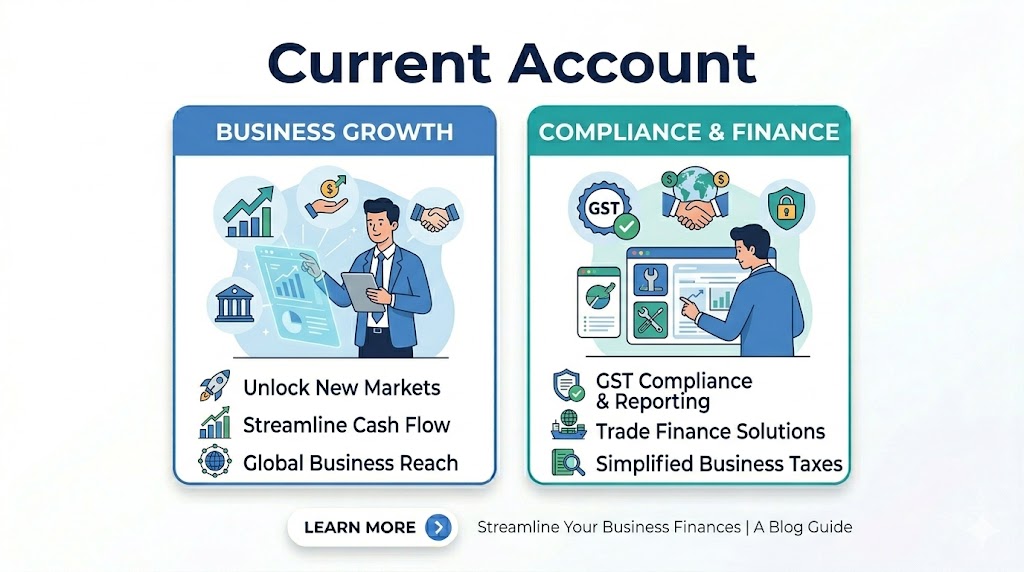
The landscape of Current Account Opening India has undergone a radical transformation as of 2026. For entrepreneurs, startups, and established enterprises, the current account remains the primary engine of business liquidity. Unlike savings accounts, these are designed specifically to handle high-volume transactions, providing the necessary infrastructure for domestic and international trade.
In the current fiscal year, the process for Current Account Opening India has shifted toward a “Digital-First” approach. Most leading Indian banks now offer instant digital onboarding via Video KYC, significantly reducing the turnaround time from several days to just a few hours. This guide provides a comprehensive roadmap for navigating the complexities of business banking in the modern Indian economy.
Modern business banking in India now integrates seamless API connectivity with accounting software. This means that once you complete your Current Account Opening India, your bank statements can automatically sync with your bookkeeping tools, allowing for real-time tracking of cash flow. This evolution is particularly beneficial for the thousands of new MSMEs emerging in commercial hubs across the country.
Who is this for?
The facility for Current Account Opening India is intended for business entities rather than individual consumers. This includes sole proprietorships, partnership firms, private limited companies, public limited companies, Trusts, Societies, and Hindu Undivided Families (HUF). If you are looking to manage business expenses, receive payments from clients, or utilize overdraft facilities, this account is a mandatory requirement.
Best ways to Current Account Opening India
The most efficient method for Current Account Opening India is through the specialized “Startup” or “SME” portals of major private banks. These banks offer dedicated relationship managers and integrated software stacks that connect your banking directly to your GST and accounting platforms. For those in remote areas, the digital wings of public sector banks have also streamlined their online application processes to support the digital India mission.
Current Account Opening India Comparison Table
| Bank Type | Monthly Average Balance (MAB) | Features | Digital Onboarding |
| Top Private Banks | ₹10,000 – ₹1,00,000 | Unlimited cash deposits, Multi-city banking | Full (Video KYC) |
| Public Sector Banks | ₹5,000 – ₹25,000 | Low transaction fees, Government scheme links | Partial |
| Small Finance Banks | ₹2,500 – ₹10,000 | High interest on surplus, localized service | Full |
| Neo-Banks | Zero Balance (often) | Integrated payroll, API banking | Instant |
Eligibility Criteria
To successfully complete Current Account Opening India, the entity must meet specific regulatory requirements:
- Legal Existence: The business must be a legally recognized entity with a valid registration.
- Operating Address: A physical place of business within India is required for verification.
- KYC Compliance: All promoters and authorized signatories must have valid individual KYC.
- Tax Registration: A valid PAN in the name of the business (or the proprietor) is mandatory.
- Specific Licenses: Depending on the industry, additional licenses (like FSSAI or MSME) may be required.
Documents Required
- Identity & Address Proof: PAN Card of the entity and Aadhaar cards of the directors/partners.
- Certificate of Incorporation: For Companies or LLPs (issued by MCA).
- Partnership Deed: For partnership firms.
- GST Certificate: Valid GST registration document.
- Board Resolution: A signed document authorizing the opening of the account and designating signatories.
- Utility Bills: Proof of business address (Electricity, Telephone, or Rent Agreement).
- Photographs: Recent passport-sized color photos of all authorized signatories.
Step by Step Process to Apply
- Select the Bank: Compare features based on your monthly transaction volume and MAB requirements.
- Online Application: Visit the bank’s official business portal and fill in the “Current Account Opening India” form.
- Document Upload: Scan and upload the digital copies of your business registration and KYC.
- Video KYC: Schedule a video call with a bank officer to verify the original documents and your identity.
- Physical Verification: In some cases, a bank representative may visit your office premises for a brief site audit.
- Account Activation: Once verified, you will receive your account number and welcome kit (chequebook, debit card).
Tips to Current Account Opening India faster
To ensure your Current Account Opening India goes through without a hitch, ensure your MSME (Udyam) registration is active, as banks prioritize these applications due to government mandates.
Choose a Bank with Local Presence
Even in a digital world, choosing a bank with a branch near your primary place of business can speed up document collection and physical verification processes. Having a local point of contact remains invaluable for high-value transactions and specialized trade finance requests.
Common Mistakes to Avoid
- Ignoring MAB Requirements: Failing to maintain the Minimum Average Balance can lead to heavy penalties and restricted account features.
- Incorrect Signatories: Ensure that the Board Resolution accurately reflects who can sign cheques or authorize electronic transfers.
- Mismatched Addresses: The address on your GST certificate must match the utility bills provided to the bank to pass the verification audit.
Safety Guidelines
Always ensure that you are applying through the official, encrypted website of the bank. The Reserve Bank of India (RBI) strictly regulates the “Know Your Customer” (KYC) norms for Current Account Opening India to prevent money laundering and financial fraud. Never share your business banking OTPs or NetBanking passwords with third-party consultants or anyone claiming to be a bank official.
Internal Resources to Improve Your Loan Approval
- NBFC vs Bank Loan India: Understand where to park your business funds for better credit leverage.
- Loan Approval Time India: See how your current account vintage affects how fast you can get a business loan.
- Loan for Low Income India: Useful for small proprietorships just starting their journey.
Frequently Asked Questions
Can I open a Current Account with zero balance?
Most traditional banks require an MAB, but certain Neo-banks and Startup-specific plans allow zero-balance accounts for a limited period or under specific conditions like maintaining a high FD.
How long does it take for Current Account Opening India?
With digital onboarding and Video KYC, accounts can be activated within 24 to 48 hours. Physical applications involving office visits may take 7 to 10 working days.
Is GST mandatory for a current account?
While not always mandatory for very small businesses with low turnover, most banks require GST registration as a primary “Proof of Business” document for corporate entities.
What is the difference between a Savings and Current Account?
Savings accounts are for personal use with transaction limits and interest; current accounts are for business use with high transaction limits and generally no interest on the balance.
Conclusion
Initiating Current Account Opening India is the first definitive step toward professionalizing your business operations. By choosing a banking partner that offers robust digital tools and fits your liquidity needs, you set a foundation for scalable growth. Remember to keep your documentation updated and adhere to the guidelines set by the Reserve Bank of India to ensure a seamless and secure banking experience.